Food waste is one of the most costly and overlooked challenges facing hospital food service operations today. The average hospital loses thousands of dollars each year on uneaten meals, over-prepared portions, and poor inventory management. But a growing number of healthcare facilities are fighting back — not with stricter policies or manual oversight, but with smart meal planning technology that transforms how food is ordered, prepared, and served.
The Scale of the Problem: Why Hospital Food Waste Matters
Hospitals operate under immense pressure to deliver nutritionally balanced meals to hundreds — sometimes thousands — of patients daily. Unlike a restaurant, they have almost no control over how many people will eat, what dietary restrictions apply, or when a patient may be transferred or discharged. The result is systemic overproduction.
Studies consistently show that up to 30–40% of hospital food is discarded before it ever reaches a patient. Beyond the environmental impact, this translates into direct financial losses, increased labour costs, and a significant carbon footprint that clashes with modern sustainability targets. Traditional approaches — whiteboards, spreadsheets, and phone-based ordering — simply cannot keep pace with the dynamic reality of a busy healthcare environment.
What Smart Meal Planning Technology Actually Does
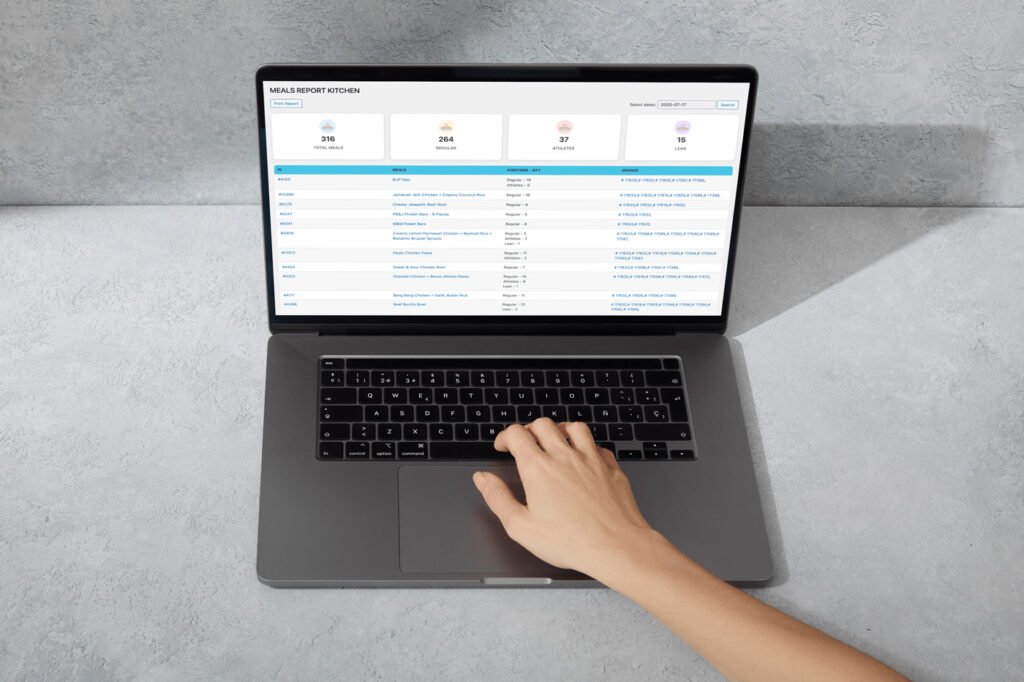
Smart meal planning technology integrates real-time data — patient census, dietary records, discharge schedules, and nutritional requirements — into a unified digital platform. Instead of guessing how many chicken breast portions to prepare, kitchen managers receive data-driven forecasts updated throughout the day.
Core capabilities that leading hospitals are now adopting include:
- Dynamic menu generation that adjusts to live patient counts and dietary flags
- Automated purchase order creation tied directly to anticipated demand
- Waste tracking dashboards that identify which meals, wards, or shifts produce the most discard
- Integration with EHR (Electronic Health Record) systems for seamless dietary order flow
- Mobile-friendly interfaces for catering staff to update meal delivery status in real time
The impact of these tools goes beyond sustainability — they directly improve patient satisfaction by ensuring the right meal reaches the right person at the right time.
Case Study: How a Regional Hospital Network Cut Waste by 28%
A regional hospital network serving over 1,200 daily inpatients partnered with a digital food operations platform to overhaul its meal preparation workflow. Before implementation, kitchen staff were operating on static 24-hour forecasts that rarely matched actual patient numbers by mealtime. Surplus meals were routinely discarded, costing the network an estimated $180,000 annually in wasted food alone.
After deploying a smart meal planning technology solution built on a modern web stack — combining a React-based front-end with real-time API integrations — the results were measurable within 90 days:
- Food waste reduced by 28% across all three campuses
- Annual food cost savings of approximately $51,000
- Patient meal satisfaction scores increased by 14 percentage points
- Kitchen staff reported a 35% reduction in end-of-shift clean-up from discarded trays
The key was not just better data, but better software — tools designed specifically for the operational rhythms of healthcare food service rather than generic restaurant management platforms.
Why the Technology Stack Matters for Healthcare Food Platforms
Not all meal prep software is created equal. Healthcare environments demand platforms that are fast, secure, and capable of handling sensitive patient data in compliance with relevant regulations. This is where the choice of technology becomes strategic.
Platforms built with Next.js deliver the performance healthcare staff need — fast page loads even on hospital Wi-Fi, server-side rendering for up-to-the-second data, and a smooth experience across devices from tablets at the nursing station to desktop workstations in the kitchen. Meanwhile, WordPress-backed solutions offer flexibility for hospitals that want to manage their own content, training documentation, and patient-facing menu portals without relying on a developer for every update.
Prepped Agency specialises in building precisely this kind of meal prep platform — combining the performance of Next.js with the content flexibility of WordPress to deliver enterprise-grade food management solutions for healthcare, education, and corporate clients.
Implementing Smart Meal Planning Technology: What to Expect
For hospitals and healthcare networks considering a move to smart meal planning technology, the implementation journey typically follows a clear path:
- Discovery & audit: Mapping existing workflows, identifying where waste occurs, and understanding integration requirements with existing hospital systems
- Platform build or configuration: Custom development or configuration of a meal management platform suited to the scale and dietary complexity
- Staff training: Onboarding kitchen, catering, and nutrition staff to new digital workflows — typically completed within two to four weeks
- Go-live and monitoring: A phased rollout with real-time waste tracking to validate the impact and optimise performance
The most successful deployments treat smart meal planning technology not as a standalone tool but as the operational backbone of an entirely reimagined food service model.
Conclusion: The Future of Hospital Food Service Is Data-Driven
Hospitals that continue to rely on manual meal planning are leaving money on the table — and food in the bin. The shift to smart meal planning technology is not just about reducing waste; it is about building a more responsive, cost-efficient, and patient-centred food service operation that can adapt in real time to the unpredictability of healthcare environments.
The technology exists, the ROI is proven, and the implementation pathway is clear. The only question is how soon your facility is ready to make the switch.
Ready to build your meal prep platform? Contact Prepped Agency at preppedagency.com to discuss a custom WordPress or Next.js meal prep solution tailored to your organisation.